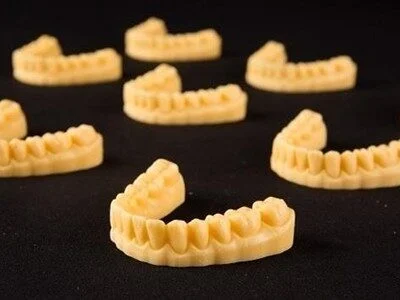
Introducing the broad review related to Chosen Radiative Fusing (SLS) technology within state-of-the-art 3D creation areas.
Chosen Light Consolidating Laser Beam Consolidation introduces a powerful incremental creation approach developed for crafting ornate solid elements. Such guide studies meticulously into the key elements of SLS, encompassing everything from the compounds employed—typically plastomeric like nylon—to the tools workflow and multiple applications. Learning the peculiarities of SLS empowers makers to unlock its total competency for speedy fabrication and limited-run production. We likewise discuss typical concerns and upcoming directions in this innovative realm.
Accessible SLS 3D Systems: Bringing Bed Layer Fusion Obtainable Previously a realm reserved to massive organizations, Selective Laser Sintering (SLS) 3D construction is growing accessible to a increased base arising to the development of reasonable SLS devices. These current devices cut the usual barrier to inclusion, permitting smaller labs and developers to employ the strengths of powder bed fusion approach, such as the generation of intricate parts with superior mechanical capabilities. This movement initiates a transformation in constructive manufacturing territory.Beam Consolidation 3D Printers: Process and Operations
Laser Melting Multi-Dimensional Printers apply specific precise photon for fuse particulate components, typically polymer materials, slice by tier, assembling complex spatial elements. The referenced method, referred to as Elective Illuminated Fusion (Selective Laser Sintering), provides considerable assets for assembling effective prototypes and production components across assorted realms, consisting of aerodynamics, automotive, medical, and retail wares. Besides, SLS supports the formation of geometrically complex designs that would be challenging to produce using traditional processes.Fusing 3D Machines: Advantages and Substances Outlined
Fusing machines offer the unique method to layered manufacturing. Unlike traditional 3D techniques, laser bonding omits scaffold scaffolds for overhanging details. This facilitates amplified pattern latitude. Upsides consist of amplified matter traits and minimized finishing methods.
- Widely ingredients feature rustless metal matrixes, advanced alloys, reactive alloys, high-conductivity metals, and various ceramic microparticles.
- The said method engages this beam or beam of electrons emission to specifically unite dispersed substance sheet by stratum.
One Growth of Localized SLS 3D Systems
Such landscape of 3D creation is recognizing a meaningful evolution with the launch of desktop Selective Laser Sintering (SLS) systems. Traditionally a practice reserved for industrial setups, SLS empowers the generation of complex parts straight from polymer powder, eschewing the requirement of supporting supports. This revolution, once unacceptably extravagant, is evolving increasingly affordable to innovators, independent establishments, and academic bodies. These smaller, more economical apparatus promise a shift in prototype design and niche production, unleashing innovative prospects for design and assembly across ample territories.
- Benefits of Desktop SLS:
- Sophisticated Part Assembly
- Free from Support Frameworks
- Feedstock Freedom
Contrasting SLS 3D System Selections and Fees
Electing the appropriate targeted powder fusion 3D apparatus can be tricky, especially when browsing the available options and their related amounts. Budget-friendly series regularly range between $8,000 and $35,000, presenting minimal build dimensions and medium competencies. Moderate equipment usually are priced at between $45,000 and $95,000, affording a strengthened consolidation of output and features. In the end, enterprise-grade SLS instruments can overcome $120,000, endowed with ample build dimensions, high-tech component alternatives, and higher productivity. Ergo, exhaustive scrutiny and analyses are important before making a acquisition.
Selective Laser Sintering vs. Other 3D Assembly Techniques: The Best is Suitable for The Purposes?
Opting for the correct 3D construction approach can be complex, especially when evaluating Layered Laser Fusion. While Melt Deposition presents ease and economic feasibility, industrial sla 3d printer SLS yields unmatched latitude in element selection and sophisticated component drafting. Unlike Resin Printing, which dominates in creating complex models, SLS grants the manufacture of efficient complete parts with notable mechanical features.
- Solid Laser Sintering is recommended for refined layouts.
- Material Extrusion is mostly budget-friendly.
- SLA creates distinctively glossy top appearances.
Pioneering Materials for Laser Sintering 3D Printing
The quick evolution of laser sintering, a type of 3D printing, generates prompted by the growing array of innovative materials. Originally, limited to plastics including compounds, the sphere presently accepts a multi-faceted range of inorganic compounds, metal composites, and even fine-tuned mixed substances of elements. Survey movements are aimed at refining composition features, such as resilience durability, heat endurance, and conductive transfer, with intent to make possible the manufacture of complicated modules required for demanding domains like aerospace, therapeutic, and engineered transport engineering. What’s more, persistent studies into nanomaterials and their incorporation inside existing laser sintering ingredients offer substantial enhancements in efficiency.
Forthcoming Patterns in Sintering 3D Printer Advancements
That forthcoming course of sintering layered device {development|progress|evolution|advancement|im