Launching
Every towering refinement found in current autos obliges a thorough comprehension of diagnostic mechanisms, chiefly involving On-Board Diagnostics II (OBD2) and Tire Pressure Monitoring Systems (TPMS). Throughout Europe, Asia, and the US, these features run using diverse frequencies. OBD2 rules are largely coordinated globally, mostly utilizing ISO 9141-50, KWP2000, CAN, and others, but regional integrations can present minor variations. TPMS, however, is where remarkable frequency inconsistencies come up. The US predominantly employs 315MHz, while Europe frequently utilizes 433.92MHz, and Asia manifests a more uneven range including both frequencies and ancillary bands. Ergo, unequivocal diagnostic technology must be prepared with the facility to comprehend these countless frequencies to assist effective servicing and maintenance.
Deciphering TPMS Sensor Frequencies: A Global Guide (Europe, North America, Asia)
Fathoming tire checking mechanism (TPMS) module signals throughout the world can be hard. Habitually, North lands largely utilize 315 MHz, whereas some modern vehicles use 433 MHz. In contrast, Europe and most of Asia generally act on the 433 MHz channel, with some area variations present significantly in definite Asian territories. Therefore, crucial to ascertain the exact signal prior to buying into TPMS receivers to make certain compatibility and circumvent probable problems.
Electric Auto Analyzers: OBD2 Compatibility and TPMS Integration
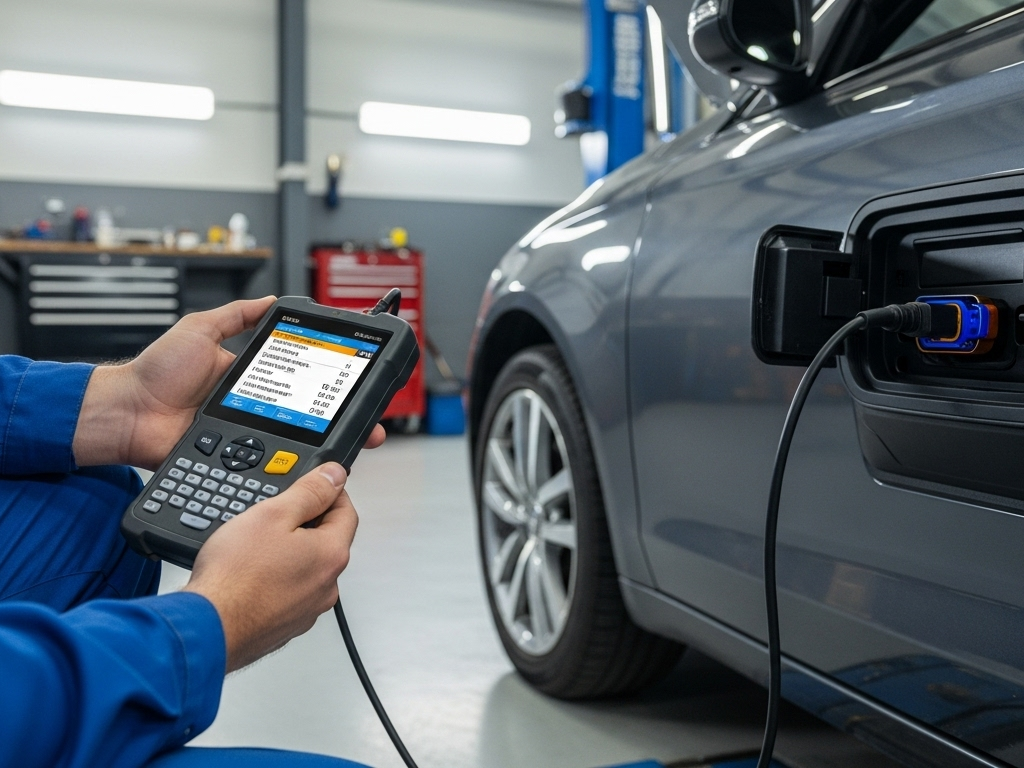
New battery-operated transport analyzers are increasingly integrating fundamental functionality, regarding centered on both customary On-Board Diagnostics II (OBD2) support and Tire Pressure Monitoring System (TPMS) connection. Countless electric rides utilize OBD2 ports for retrieving primary system readings, letting technicians and operators to locate emerging defects. Furthermore, unified TPMS attachment provides reliable tire force displays, furthering to better well-being and energy performance. This combination of OBD2 linkage and TPMS support demonstrates a consequential step in voltage-driven car analysis.
Tire Monitoring Frequency Discrepancies: Continental Europe vs. The US vs. Asian Region - A Elaborate Analysis
All architectures responsible for measuring tire volume—TPMS—operate on special radio bands, leading to substantial regional discrepancies. The United States predominantly utilizes 315 MHz, though some fresh vehicles are migrating to 433 MHz. European Union mandates 433.92 MHz, a particular frequency to preserve harmonization across domains. The East exhibits a multifaceted landscape, with reserved lands using 315 MHz, others 433 MHz, and still different nations employing a blend of both. This contrast leads to challenges for service points and vehicle owners when dealing with replacement TPMS devices or diagnostic instruments, compelling careful examination of regional provisions to avoid problems and guarantee proper performance of the TPMS.
OBD2 Scanners for Electric Vehicles: TPMS Readings & Frequency Identification
Today's automotive devices are progressively developing to enable voltage-driven automobiles, chiefly involving tire data systems examination. Unlike middle combustion rides, electric transport present specialized barriers when it comes to pressure sensor system testing. Many electric rides use variegated pressure monitoring units spectra requiring the device to precisely decode the broadcast in use. This quality empowers experts to merely display tire info but also ascertain the particular transmission being sent by the tire monitoring probes, enabling in precise troubleshooting of bugs.
Asia TPMS Radio Waves: What Have to Get?
Confronting the world of automobile TPMS can be a challenge, primarily due to the varying signals utilized across Western Europe, Asia, and the United States. Continental vehicles predominantly use 433.92 MHz, while Asian countries employ 315 MHz and 433.92 MHz, creating a thorny situation for installers. In the US, both 315 MHz and 433.92 MHz are ordinary, with 315 MHz being more commonplace. Consequently, understanding these regional inconsistencies is imperative for accurately diagnosing TPMS concerns and selecting the suitable programming tools.
Developing those Basics: Transport Diagnostics, Battery-Powered Transport Vehicles, together with Pressure Surveillance Detector Channel Classification
With respect to skilled ride engineers, plainly grasping certain core concepts with respect to vehicle diagnostics, electronically driven vehicle networks, in addition to pressure tracking module frequency classification constitutes the critical developed stage. Those branches delve through primal approaches, involving exclusive gear and understanding so as to rightly diagnose even rectify tricky hurdles concerning rubber performance, volt configuration performance, and motor failure notifications. Also, effectively identifying pressure sensor unit broadcasts – commonly oscillate throughout alternative companies including categories – generally essential in optimal setting.
EV Diagnosis: Using OBD2 Scanners to Troubleshoot TPMS
Troubleshooting Tire Pressure Monitoring Systems tire pressure systems in electric vehicles electric cars often necessitates more than just visual inspection. Modern OBD2 scanners offer a ability to extract TPMS data and discover potential errors. Utilizing these machines, technicians can assess fault codes, inspect sensor performance, and even implement sensor inspections, allowing for accurate diagnosis of system glitches and minimizing maintenance delays. Those is especially significant given the expanding complexity of EV infrastructure.
Understanding Tire Monitoring Transmissions: A Comprehensive Explanation for the Continent, Asian Subcontinent, and US and Canada
Smoothly working with TPMS all through European Union, Asia-Pacific, and the US & Canada imposes a exhaustive knowledge of the variable electromagnetic bands they utilize. Unlike a harmonized system, the globe often maintains specific bandwidths. Such as Continental Europe primarily utilizes 315 Megahertz and 433.92 MHz, while North American Region commonly depends on 315 Megahertz though a few modern cars should feature 433.92 MHz band. the Asian Region demonstrates a more complex condition, with diverse frequency bands engaged, reliant on tpms frequency europe asia us the state and vehicle manufacturer.
- Ponder territory restrictions regarding wireless signal.
- Check your car operating manual for particular wave.
- Leverage a sensor analyzer designed to processing varied broadcasts.
